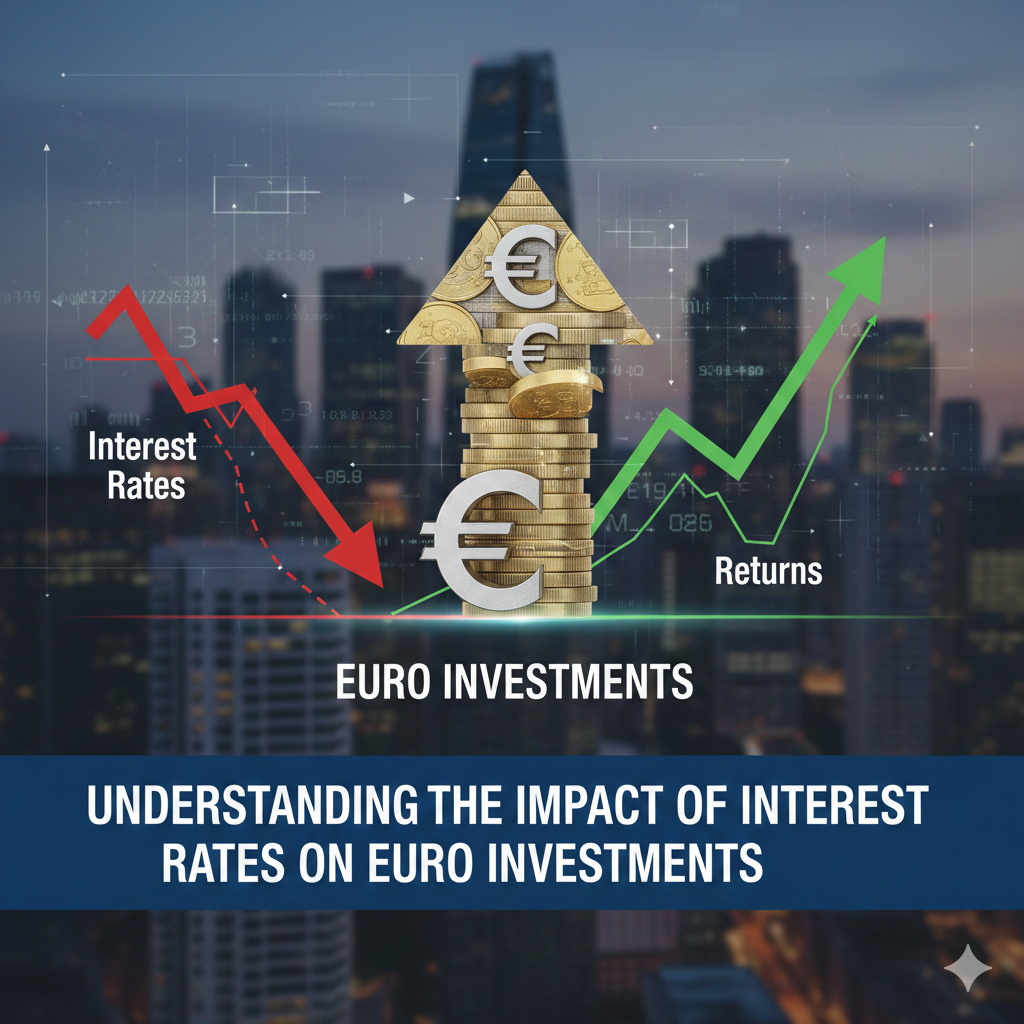
Introduction Interest Rates
Interest rates play a crucial role in shaping the landscape of financial markets, including Eurozone investments. Whether you’re investing in Eurozone stocks, bonds, or ETFs, understanding how changes in interest rates affect your investments is key to making informed decisions. In this article, we will explore how interest rates impact various types of Euro investments and provide tips on how to navigate interest rate changes effectively.
Table of Contents Interest Rates

What are interest rates and how do they work?
The impact of interest rates on Eurozone stocks
How interest rates affect Eurozone bonds?
Interest rates and Eurozone ETFs
Strategies for managing interest rate risk in Euro investments
FAQ Interest Rates
Conclusion Interest Rates
What Are Interest Rates and How Do They Work?
Interest rates are the cost of borrowing money, expressed as a percentage of the principal. Central banks, like the European Central Bank (ECB), set benchmark interest rates that influence the overall cost of borrowing in the economy. When interest rates rise or fall, it affects everything from consumer loans to corporate borrowing and, importantly, investment returns.
For investors, interest rates are important because they influence the rate of return on investments. Higher interest rates can make fixed-income investments like bonds more attractive, while lower rates can encourage more spending and investment in stocks.
The Impact of Interest Rates on Eurozone Stocks
Interest Rates and Eurozone ETFs Interest Rates
Eurozone ETFs, which typically track a basket of Eurozone stocks or bonds, can also be influenced by changes in interest rates. When interest rates rise, the performance of ETFs that focus on interest-sensitive sectors may be affected. Additionally, changes in interest rates can affect the broader market sentiment, influencing ETF prices.
Investors in Eurozone ETFs should consider the overall interest rate environment and how it may impact the sectors and asset classes that the ETF holds. For example, an ETF focused on dividend stocks may perform better in a low-interest-rate environment due to higher demand for yield.
Strategies for Managing Interest Rate Risk in Euro Investments Interest Rates
Here are a few strategies that can help mitigate the impact of interest rate fluctuations on your Euro investments:
Diversify Across Asset Classes: Spread your investments across different asset classes, such as stocks, bonds, and real estate, to reduce the impact of interest rate changes on your portfolio.
Focus on Short-Term Bonds: If you’re investing in bonds, consider short-term bonds, which are less sensitive to interest rate changes than long-term bonds.
Invest in Interest-Rate Hedged ETFs: Some ETFs are designed to hedge against interest rate risk, providing an additional layer of protection.
FAQ Interest Rates
Q1: How often does the European Central Bank change interest rates?
The ECB reviews interest rates regularly, typically every six weeks during their governing council meetings, but changes are not guaranteed at every meeting.
Q2: Can interest rates affect the value of my Eurozone stock investments?
Yes, changes in interest rates can affect stock market performance, particularly in sectors that are sensitive to borrowing costs and economic growth.
Q3: What happens to Eurozone bonds when interest rates rise?
When interest rates rise, the price of existing bonds tends to fall, as new bonds with higher yields become more attractive.
Conclusion Interest Rates
Interest rates are a critical factor in Eurozone investments, impacting everything from stocks to bonds and ETFs. By understanding how interest rates influence different asset classes, you can better manage your Euro investments and make more informed decisions. Keep an eye on ECB policies and consider strategies to mitigate interest rate risk, ensuring your investments continue to perform well, regardless of interest rate changes.
Internal link
Euro Investing Risks Beginners Often Overlook
External link