introduction Eurozone Recession
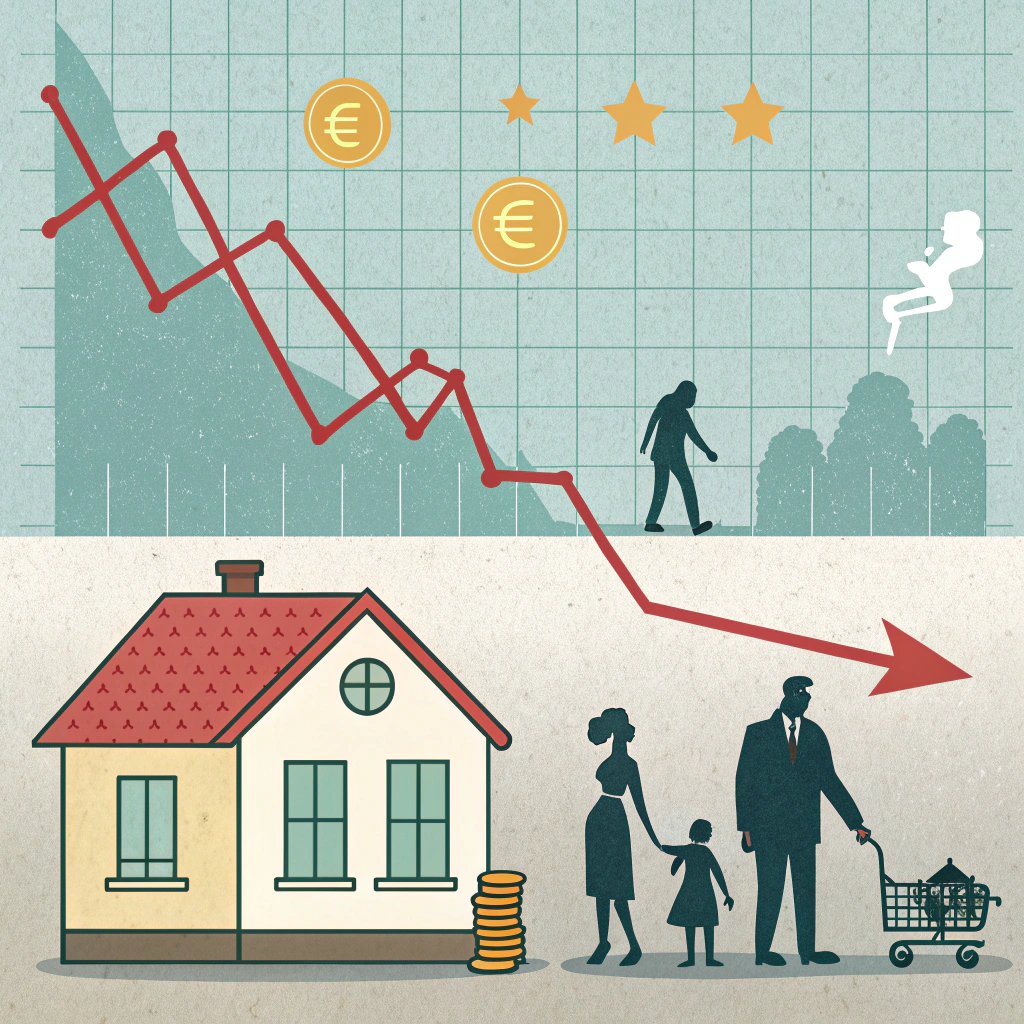
Eurozone Recession: What It Means for Households & Investors A eurozone recession doesn’t arrive as a single dramatic moment. It shows up gradually—slower hiring, cautious spending, delayed investments, and tighter credit. For households and investors, the impact depends less on the headline and more on where income comes from, how debt is structured, and what assets you hold.
This matters because the word recession triggers fear, yet eurozone downturns often look different from U.S. recessions. Social safety nets, labor protections, and policy coordination change how pain is distributed and how quickly it fades. Understanding what actually happens—on the ground—helps you prepare without overreacting.
FAQs Eurozone Recession
Conclusion Eurozone Recession
- The Short Answer (Featured-Snippet Ready)
A eurozone recession typically means slower growth, softer job markets, cautious consumer spending, and volatile investments, with impacts spread unevenly across countries and households due to strong labor protections and social safety nets.
- What Defines a Eurozone Recession
In simple terms, a eurozone recession occurs when:
economic output contracts for a sustained period,
demand weakens across multiple countries,
business and consumer confidence falls.
Because the eurozone is multi-country, recessions are often asynchronous—some countries slow earlier, others later. This makes downturns feel prolonged rather than sharp.
[Expert Warning]
A eurozone recession is usually broad but uneven—not a single synchronized collapse.
- How Households Feel a Recession First
Households typically notice recession effects through:
reduced overtime or bonuses,
hiring freezes,
higher caution in spending,
tighter credit approvals.
Unlike sudden shocks, eurozone downturns often feel like gradual tightening. Expenses don’t necessarily spike—but income growth stalls.
This “slow squeeze” is psychologically different from abrupt layoffs.
- Jobs, Wages, and Labor Protection
One key difference in eurozone recessions is labor protection.
In many countries:
layoffs are more regulated,
reduced hours or temporary contracts are used first,
wage growth slows before jobs disappear.
This means:
unemployment may rise more slowly,
income insecurity spreads quietly,
recovery can take longer.
[Pro-Tip]
In eurozone recessions, watch hours worked—not just unemployment rates.
- Prices, Inflation, and Purchasing Power
Recessions interact with inflation in complex ways.
During a downturn:
demand-driven inflation cools,
essential costs may stay elevated,
purchasing power pressure lingers.
Households may feel relief on some prices, while others—like energy or rent—remain sticky. This creates a mixed inflation experience, not a clean reset.
- How Investors Are Affected
Investors face:
earnings pressure on cyclical companies,
volatility in equities,
changing bond dynamics as policy expectations shift.
Eurozone investors often see:
defensive sectors outperform,
dividends become more important,
quality balance sheets rewarded.
[Money-Saving Recommendation]
During recessions, reducing unnecessary trading often saves more than trying to time the bottom.
- Information Gain: Why Eurozone Recessions Feel “Slower”
Many people expect recessions to look dramatic. Eurozone downturns often don’t.
Why?
automatic stabilizers soften shocks,
governments intervene earlier,
labor markets adjust gradually.
The trade-off:
less immediate pain
but longer recovery periods.
This creates the impression of “permanent stagnation,” even when the economy is slowly healing.
[Expert Warning]
A slow recession is not the same as a deep one.
- Practical Table: Household vs Investor Impact
| Group | Typical Impact | Key Risk |
| Salaried households | Income stagnation | Job mobility |
| Self-employed | Demand volatility | Cash flow |
| Renters | Limited relief | Sticky rents |
| Homeowners | Rate sensitivity | Refinancing limits |
| Equity investors | Market volatility | Emotional selling |
| Bond investors | Policy uncertainty | Duration risk |
- Common Misconceptions
Misconception 1: Recession means mass layoffs
→ Often not immediately
Misconception 2: Prices always fall quickly
→ Many costs remain sticky
Misconception 3: Investors should exit markets
→ Timing is extremely difficult
Misconception 4: All countries suffer equally
→ Impacts vary widely
- UNIQUE SECTION — Real-World Timeline Example
Year 1:
hiring slows,
consumer spending softens,
markets turn volatile.
Year 2:
hours worked decline,
selective layoffs begin,
policy support increases.
Year 3:
confidence stabilizes,
investment returns,
recovery becomes visible—quietly.
This drawn-out path is typical for eurozone cycles.
- How to Respond Without Panic
For households:
Build short-term cash buffers
Avoid unnecessary new debt
Focus on income stability
For investors:
Revisit time horizon
Reduce overconcentration
Prioritize quality assets
Limit emotional decisions
Calm adjustments outperform dramatic moves.
YouTube Embed (Contextual & Playable)
Embed an explainer such as:
“What Happens During a Recession? Explained Simply”
Choose an economics-education channel that focuses on real-life impacts, not fear-driven commentary.
- FAQs (Schema-Ready)
What signals a eurozone recession?
Broad slowdown across multiple countries.
Do eurozone recessions cause mass unemployment?
Usually slower, more gradual increases.
How long do eurozone recessions last?
Often longer but less severe.
Should investors sell during a recession?
Usually not—timing is risky.
Does the ECB intervene during recessions?
Often, through rate policy and support measures.
ilternal link
https://dailyeuros.com/index.php/2026/01/09/eurozone-outlook-what-to-expect
external link
https://economy-finance.ec.europa.eu/economic-forecast-and-surveys/economic-forecasts/spring-2025