introduction Euro Investing
Euro Investing Risks Beginners Often Over look The biggest risks in euro investing aren’t the ones beginners worry about most. They’re not just market crashes or currency swings—they’re structural, behavioral, and expectation-related risks that quietly erode results over time. These risks don’t make headlines, which is exactly why they catch new investors off guard.
This topic matters because many beginners enter euro investing with U.S.-centric assumptions or oversimplified ideas about diversification. Europe’s markets operate differently, respond to different signals, and reward different behaviors. Recognizing the less-obvious risks early helps you avoid costly mistakes without becoming overly cautious or paralyzed.
FAQs Euro Investing
Conclusion

- The Short Answer (Featured-Snippet Ready)
Beginners often overlook euro investing risks related to policy shifts, structural differences, taxes, currency alignment, and behavior, not just market volatility. Managing expectations matters as much as managing assets.
- The “Headline Risk” Trap
Most beginners fixate on:
elections,
debt headlines,
geopolitical news.
While these events matter, markets usually price them in quickly. Overreacting to headlines often leads to buying late or selling early.
The real risk isn’t the news—it’s how you react to it.
[Expert Warning]
Headlines feel urgent, but portfolios suffer most from rushed decisions.
-
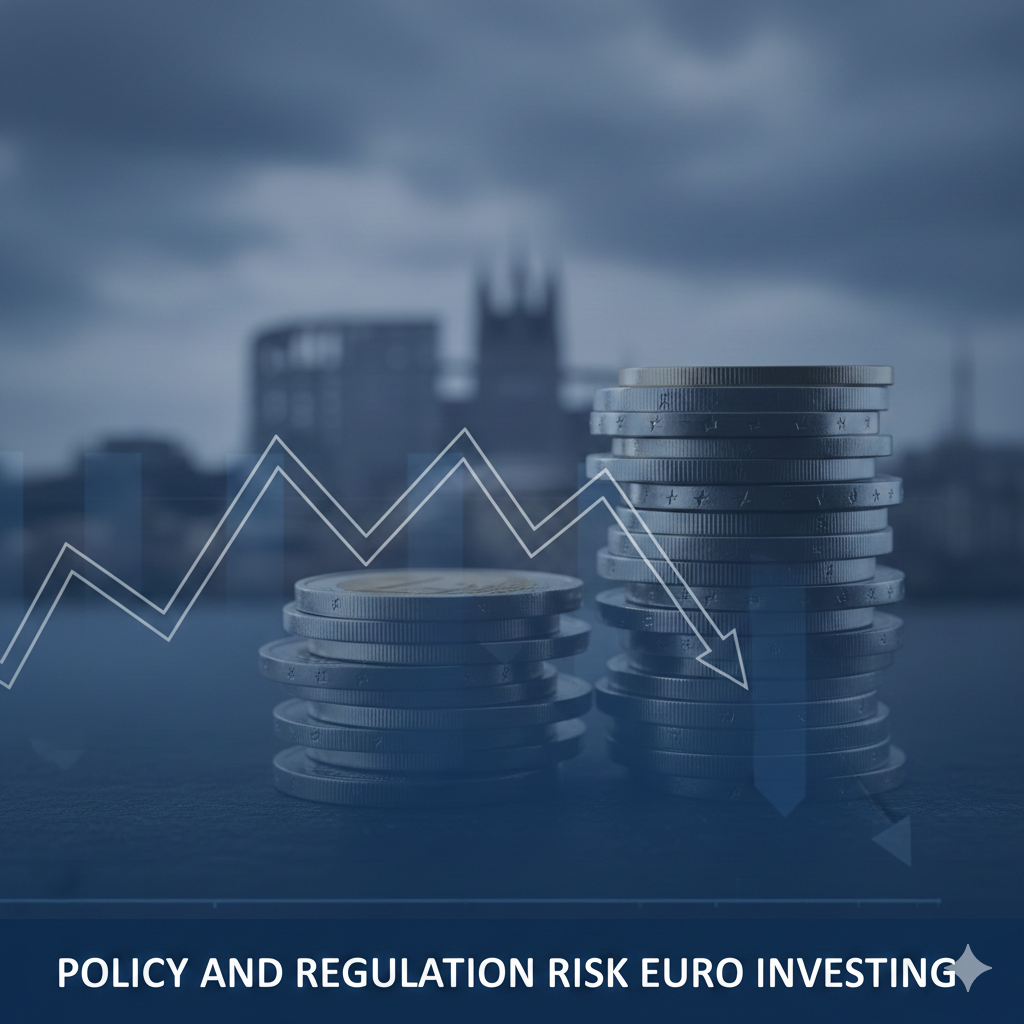
Policy and Regulation Risk Euro Investing
European markets are heavily influenced by:
centralized regulation,
labor protections,
environmental and social policy.
These policies:
reduce volatility in some sectors,
limit growth speed in others.
Beginners expecting U.S.-style rapid earnings expansion often feel disappointed. That disappointment becomes a risk when it leads to frequent switching.
Understanding policy context prevents unrealistic expectations.
-
Structural Market Differences
European equity markets differ structurally:
more value-oriented,
fewer high-growth tech giants,
stronger dividend culture.
This means:
returns may feel “slower,”
drawdowns may be less dramatic,
patience is rewarded more than momentum.
Treating euro markets like U.S. markets is a common—and costly—mistake.
- Dividend and Tax Friction
Many European companies pay dividends more frequently than U.S. peers. That’s a benefit—but it comes with tax complexity.
Risks beginners overlook:
withholding taxes,
delayed tax credits,
reinvestment friction.
These don’t destroyreturns, but they reduce efficiency if ignored.
[Pro-Tip]
Dividend yield looks attractive—after-tax yield is what matters.
- Currency Mismatch Risk
Currency risk isn’t just about exchange rates—it’s about alignment.
Problems arise when:
investments are in euros,
expenses are in another currency,
withdrawals happen at inconvenient FX levels.
This mismatch can force conversions at bad times.
[Money-Saving Recommendation]
The closer your investment currency matches your future spending, the less FX risk matters.
- Information Gain: Behavior Is the Biggest Risk
What top articles rarely say plainly:
Most euro investing losses come from behavior, not markets.
Common behavioral traps:
abandoning euro exposure during underperformance,
chasing U.S. returns at peaks,
switching strategies mid-cycle.
Europe often lags—then quietly catches up. Investors who lack patience miss that cycle entirely.
- Practical Table: Overlooked Risks & Responses
| Overlooked Risk | Why It Matters | Smarter Response |
| Policy-driven markets | Slower growth | Adjust expectations |
| Structural differences | Different cycles | Diversify globally |
| Tax friction | Reduces net return | Use efficient funds |
| Currency mismatch | Forced timing | Align time horizon |
| Behavioral mistakes | Compounding loss | Simplify strategy |
- Common Beginner Mistakes and Fixes
Mistake 1: Expecting U.S.-style returns
Fix: Measure success by diversification benefits.
Mistake 2: Reacting to European headlines
Fix: Focus on long-term fundamentals.
Mistake 3: Ignoring taxes
Fix: Understand net returns.
Mistake 4: Over-monitoring performance
Fix: Review periodically, not constantly.
[Expert Warning]
The more often beginners adjust euro exposure, the worse results tend to be.
- UNIQUE SECTION — Practical Insight From Experience
In practice, the investors who benefit most from euro exposure treat it as supporting structure, not the star performer. They don’t expect Europe to lead every cycle. They let it do its job—diversification, income, and balance—without interference.
Those who constantly compare euro returns to U.S. benchmarks usually abandon the strategy at the worst moment.
- How to Manage Euro Investing Risks Sensibly
A sensible risk approach:
Keep euro exposure proportional
Use broad, low-cost funds
Avoid constant reallocations
Accept different performance cycles
Focus on total portfolio behavior
Risk management is about consistency, not control.
YouTube Embed (Contextual & Playable)
Embed an educational video such as:
“Behavioral Mistakes Investors Make with International Stocks”
Choose a finance-education channel focused on psychology and long-term investing.
- FAQs (Schema-Ready)
What is the biggest hidden risk in euro investing?
Investor behavior and unrealistic expectations.
Are euro investments riskier than U.S. investments?
Not necessarily—just different.
Do taxes significantly reduce returns?
They can if ignored.
Should beginners avoid euro investing?
No—just approach it realistically.
Is diversification worth slower performance?
Yes, over full market cycles.
internal link
https://dailyeuros.com/index.php/2026/01/09/how-currency-fluctuations-affect-euro
external link
https://smartasset.com/investing/investing-in-europe?utm_source=chatgpt.com