Introduction Eurozone ETFs for Beginners
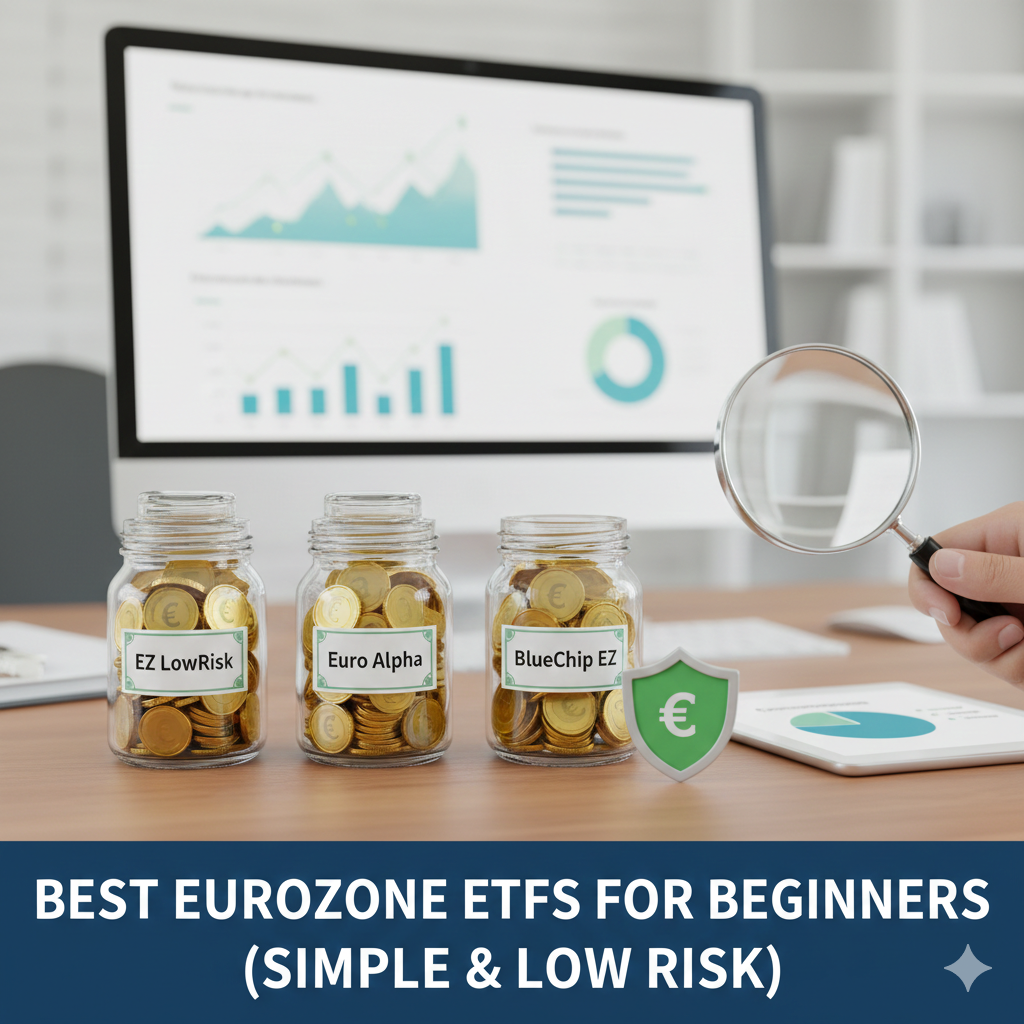
The best eurozone ETFs for beginners are the ones that offer broad exposure, low costs, and simple structure, without forcing you to predict markets or pick individual stocks. For most new investors, the goal isn’t beating the market—it’s participating in it without making avoidable mistakes.
This topic matters because investing in Europe feels intimidating to many beginners. Different countries, multiple economies, unfamiliar companies, and currency questions can make eurozone investing seem complex. In reality, eurozone ETFs were designed to simplify all of that. When chosen correctly, they provide diversified exposure to Europe’s largest companies while keeping risk understandable and manageab
Table of Contents
The short answer (featured snippet)
What a eurozone ETF actually is
Why beginners often misunderstand euro investing
What makes an ETF “beginner-friendly”
Broad eurozone ETFs vs country-specific ETFs
Currency risk: what you should (and shouldn’t) worry about
Information Gain: why simplicity beats precision for beginners
Practical table: types of eurozone ETFs explained
Common beginner mistakes and how to avoid them
UNIQUE: Beginner mistake most people make
How to start investing step-by-step
Eurozone ETFs for Beginnerslusion Eurozone ETFs for Beginners
- The Short Answer (Featured-Snippet Ready)
The best eurozone ETFs for beginners are broad, low-cost funds that track major eurozone indices, giving exposure to many countries and companies without requiring stock selection or market timing.
- What a Eurozone ETF Actually Is
A eurozone ETF is an exchange-traded fund that holds stocks from countries that use the euro. Instead of buying shares in dozens of European companies individually, you buy one fund that owns them for you.
Most eurozone ETFs focus on:
large, established companies,
multiple eurozone countries,
well-known industries like finance, energy, consumer goods, and manufacturing.
This structure spreads risk automatically and reduces the impact of any single company or country underperforming.
- Why Beginners Often Misunderstand Euro Investing
Many beginners assume eurozone investing requires:
deep knowledge of European politics,
constant currency predictions,
frequent trading.
That’s not how long-term investing works.
In practice, eurozone ETFs are:
designed for passive participation,
built for diversification,
meant to be held, not traded.
The complexity is mostly psychological, not structural.
[Expert Warning]
Overthinking eurozone investing often leads beginners to take more risk, not less.
- What Makes an ETF “Beginner-Friendly”
Not all ETFs are equal for beginners.
Beginner-friendly eurozone ETFs usually share these traits:
broad market coverage,
low expense ratios,
high liquidity,
transparent index tracking,
simple holdings structure.
They avoid:
leverage,
niche themes,
concentrated country bets.
The simpler the fund, the easier it is to hold through market ups and downs.
- Broad Eurozone ETFs vs Country-Specific ETFs
Broad Eurozone ETFs
These track indices covering multiple eurozone countries.
Why beginners prefer them:
diversification across economies,
reduced political and local risk,
smoother long-term performance.
They’re ideal if your goal is European exposure, not country speculation.
Country-Specific ETFs
These focus on one country, such as Germany, France, or Italy.
Why beginners should be cautious:
higher volatility,
greater political sensitivity,
performance tied to local events.
Country ETFs can be useful later—but they’re rarely the best starting point.
[Pro-Tip]
Beginners benefit more from breadth than from precision.
- Currency Risk: What You Should (and Shouldn’t) Worry About
Currency risk sounds scary, but it’s often misunderstood.
When you invest in eurozone ETFs:
stock performance matters more than daily currency swings,
currency effects tend to balance out over long periods,
short-term fluctuations rarely change long-term outcomes.
What beginners should avoid
trying to hedge currency exposure too early,
reacting emotionally to EUR/USD moves,
assuming currency movement cancels investment returns.
[Money-Saving Recommendation]
For beginners, ignoring currency noise usually leads to better long-term decisions than trying to manage it actively.
- Information Gain: Why Simplicity Beats Precision
Most top-ranking articles list specific ticker symbols and rankings. What they often miss is behavioral risk.
Beginners don’t lose money because they chose the “wrong” eurozone ETF. They lose money because they:
switch funds too often,
chase short-term performance,
abandon positions during volatility.
A simple, broad ETF held consistently often outperforms a “perfectly optimized” portfolio that’s constantly changed.
Simplicity isn’t a compromise—it’s a strategy.
- Practical Table: Types of Eurozone ETFs Explained
| ETF Type | Coverage | Volatility | Beginner Friendly |
| Broad eurozone ETF | Multiple countries | Moderate | ✅ Yes |
| Large-cap euro ETF | Major companies | Lower | ✅ Yes |
| Country-specific ETF | Single country | Higher | ⚠️ Caution |
| Sector ETF | Single industry | High | ❌ No |
| Leveraged ETF | Amplified exposure | Very high | ❌ No |
- Common Beginner Mistakes and How to Avoid Them
Mistake 1: Trying to pick “the best” country
Fix: Start with broad exposure.
Mistake 2: Overreacting to euro volatility
Fix: Focus on long-term returns.
Mistake 3: Buying too many ETFs
Fix: One or two diversified funds are enough.
Mistake 4: Checking prices daily
Fix: Set a review schedule instead of constant monitoring.
[Expert Warning]
The more often beginners check prices, the more likely they are to make emotional decisions.
- UNIQUE SECTION — Beginner Mistake Most People Make
The most common beginner mistake is believing:
“I need to understand everything before investing.”
In reality, eurozone ETFs are designed so you don’t need deep expertise. Waiting for perfect understanding often means missing years of compounding. Learning while invested—slowly and responsibly—is usually the better path.
- How to Start Investing in Eurozone ETFs (Step-by-Step)
Decide why you want European exposure
Choose a broad eurozone ETF
Invest a small, comfortable amount first
Use a long-term holding mindset
Reinvest dividends if possible
Review annually, not daily
This process reduces stress and increases consistency.
YouTube Embed (Contextual & Playable)
Embed an educational video such as:
“How ETFs Work for Beginners”
Choose a long-term investing or personal finance channel focused on fundamentals—not hype.
- FAQs (Schema-Ready) Eurozone ETFs for Beginners
Are eurozone ETFs good for beginners?
Yes, especially broad and low-cost ones.
Do I need to worry about currency risk?
Not much as a long-term beginner investor.
Is one eurozone ETF enough?
Often, yes.
Are eurozone ETFs risky?
They carry market risk, but diversification helps.
Should I time my entry into eurozone ETFs?
No—consistent investing usually works better.
Internal link
https://dailyeuros.com/index.php/2026/01/09/euro-investing
External link