Introduction Euro Is Falling vs the Dollar
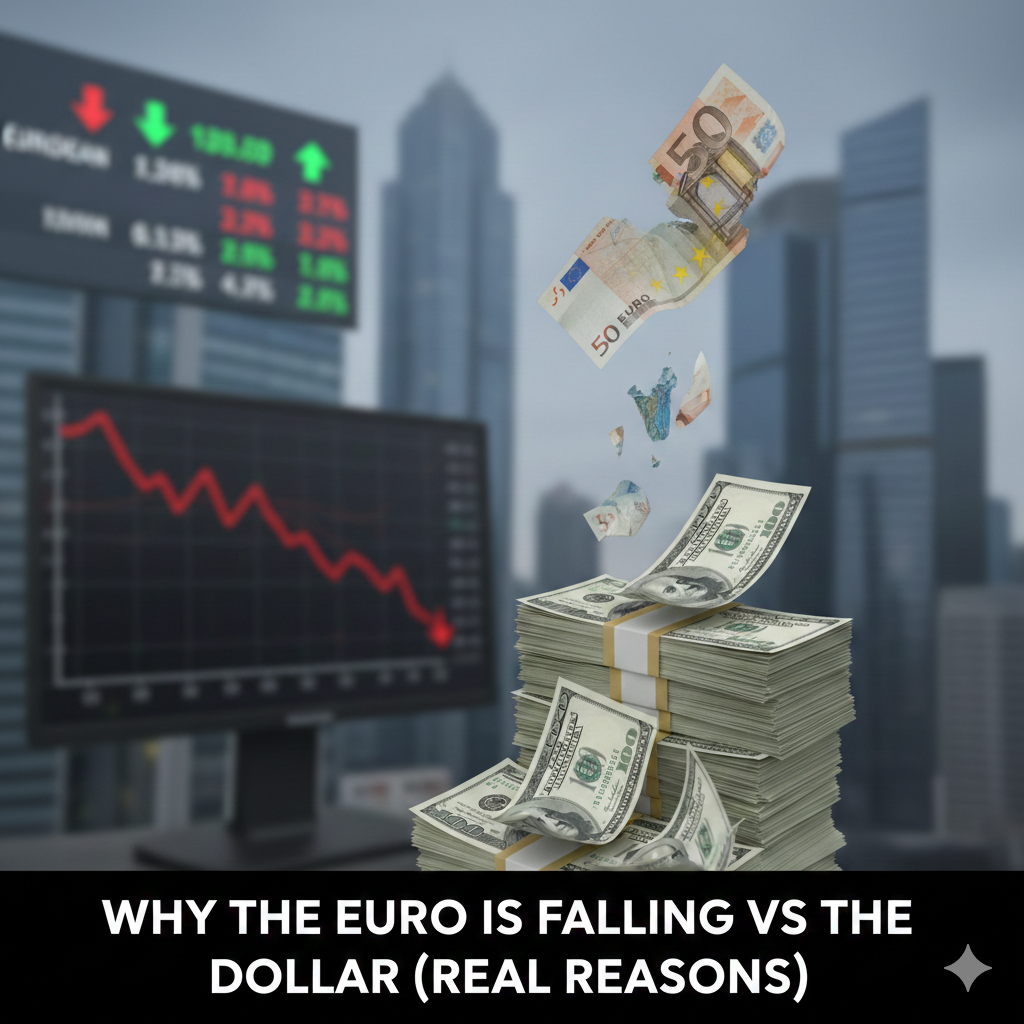
Why the Euro Is Falling vs the Dollar (Real Reasons) The euro is falling against the dollar mainly because holding dollars currently offers better expected returns and perceived safety than holding euros. This usually happens when U.S. interest-rate expectations stay higher, investors move into defensive positions, or markets believe the eurozone economy will lag relative to the U.S.
This question matters now because euro–dollar moves affect far more than traders. Travelers pay more for hotels and meals, businesses face higher import costs, freelancers see invoice values change, and investors feel currency risk in their portfolios. Understanding why the euro weakens helps you react calmly instead of emotionally—and avoid costly mistakes when exchanging or transferring money.
FAQs Euro Is Falling vs the Dollar
Conclusion Euro Is Falling vs the Dollar
- The Short Answer (Featured-Snippet Ready)
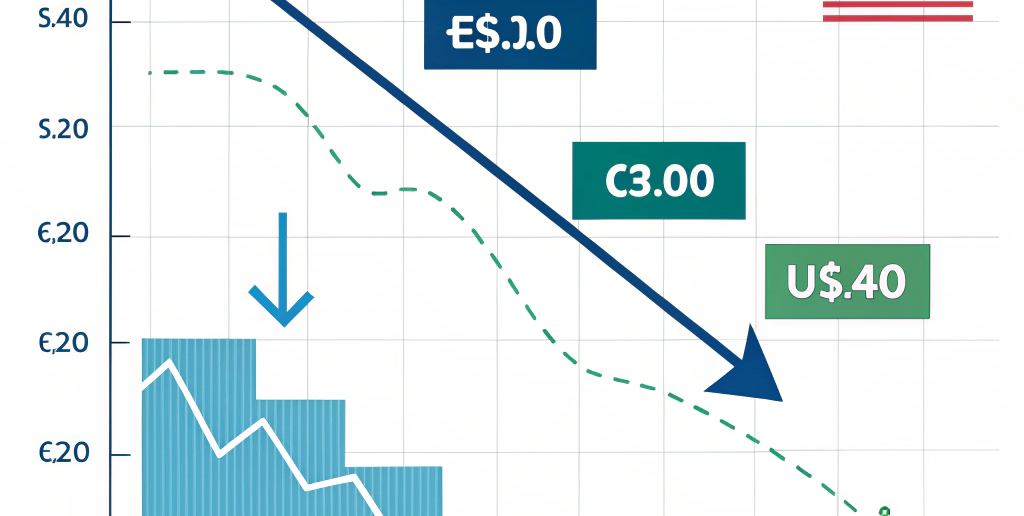
The euro falls against the dollar when markets expect better returns or greater safety in U.S. assets, usually due to higher interest-rate expectations, defensive investor behavior, or weaker relative eurozone outlooks.
- The “Relative Scoreboard” Effect Euro Is Falling vs the Dollar
Currencies don’t trade on absolute success or failure. They trade on comparisons.
The euro can weaken even if Europe is doing “fine,” as long as the U.S. looks better on what markets care about at that moment—often interest rates and stability. Think of EUR/USD as a scoreboard comparing two teams. One doesn’t need to collapse for the other to win.
This is why you sometimes see the euro fall on days with no major European news. The driver often sits on the U.S. side of the comparison.
- Interest-Rate Expectations and Yield Gaps Euro Is Falling vs the Dollar
The most consistent pressure on the euro comes from expected interest-rate differences.
When investors believe U.S. rates will stay higher for longer than eurozone rates, capital naturally leans toward dollar-based assets. This creates steady demand for USD and gradual selling pressure on EUR.
Why expectations matter more than decisions
Markets move before central banks act. If traders believe the ECB will cut sooner—or hesitate longer—than the Federal Reserve, the euro can fall weeks before any official announcement.
[Expert Warning]
Trading the euro only on central-bank decision days is often too late. The market usually prices the outcome in advance.
- Risk Sentiment and Safe-Haven Demand
The U.S. dollar plays a special role globally. In uncertain times, investors often treat USD as a safe parking place because it’s liquid, widely accepted, and deeply integrated into global finance.
When fear rises—due to geopolitical tension, recession concerns, or financial stress—money often moves into dollars. This alone can push EUR/USD lower, even if Europe hasn’t changed fundamentally.
- Growth, Inflation, and the Importance of Surprises
Economic data doesn’t move currencies because it’s “good” or “bad.” It moves them when it’s unexpected.
Inflation supports a currency if it leads to tighter policy
Inflation hurts a currency if it signals instability
Inflation does nothing if it was already expected
The same logic applies to GDP, jobs data, and confidence surveys. What matters is how the data changes expectations about future policy and growth.
- Energy Prices and Trade Balance Pressure
One factor many articles overlook is energy dependence.
The eurozone imports a large share of its energy. When energy prices rise, more euros are exchanged for foreign currencies to pay for those imports. Over time, this creates a drag on the euro through trade and payment flows.
This doesn’t cause sudden drops. It applies slow, persistent pressure, especially during energy price spikes.
[Money-Saving Recommendation]
If you exchange euros for travel or invoices, focus less on daily price noise and more on when and how you convert. Bad timing plus bad conversion methods compound losses.
- Practical Table: Common Euro-Fall Scenarios
| What You Notice | Likely Driver | What It Means | Practical Response |
| Euro falls after strong U.S. data | Rate expectations | USD yields look better | Wait for calmer session |
| Euro drops with no EU news | Risk-off flows | Global fear favors USD | Avoid panic conversion |
| Euro weakens near ECB meetings | Guidance shift | Market expects easier policy | Convert in stages |
| Slow euro decline over weeks | Capital flow trend | Persistent USD preference | Set rate + time triggers |
| Euro falls as energy prices rise | Trade pressure | External cost burden | Expect gradual pressure |
| Euro jumps on “bad” news | Expectations reset | Feared outcome didn’t happen | Ignore headlines |
- Information Gain: Why Markets Price the Future First
Most explanations are written after the move and try to fit a story around it. But FX markets trade expectations, not explanations.
The euro often moves because:
future policy paths are repriced,
investor positioning is crowded,
or fear/optimism shifts suddenly.
A useful mental model:
EUR/USD ≈ Return Advantage + Risk Mood + Surprise
If you understand those three forces, you’ll be less confused—even when price action looks irrational.
- Common Mistakes and Fixes Euro Is Falling vs the Dollar
Mistake 1: Blaming one headline
Fix: Identify the channel—rates, risk, growth, or trade.
Mistake 2: Waiting for the “perfect” rate
Fix: Convert in tranches to reduce regret.
Mistake 3: Ignoring hidden conversion costs
Fix: Avoid dynamic currency conversion and wide spreads.
Mistake 4: Watching EUR/USD constantly
Fix: Use a weekly check and clear action rules.
[Pro-Tip]
For non-traders, the biggest win is keeping more money, not predicting prices.
- UNIQUE SECTION — Myth vs Reality Euro Is Falling vs the Dollar
Myth: The euro falls because Europe is failing
Reality: It often falls because the U.S. looks relatively stronger
Myth: ECB decisions only matter on announcement day
Reality: Expectations move the euro long before meetings
Myth: Big drops guarantee rebounds
Reality: Currency trends can persist longer than expected
- Practical Playbook: What to Do If You Need Euros Euro Is Falling vs the Dollar
Define your purpose (travel, invoice, investing)
Use a time-based or rate-based plan, not emotion
Convert in stages, not all at once
Choose low-leak conversion methods
If you regularly exchange currencies, the method often matters more than the exact rate.
- FAQs Euro Is Falling vs the Dollar Euro Is Falling vs the Dollar
Why does the euro fall when the ECB doesn’t cut rates?
Because markets trade expectations, not actions.
Is euro weakness mostly about the U.S.?
Often yes, but eurozone growth and policy still matter.
Does inflation help or hurt the euro?
It depends on how it changes future policy expectations.
Can energy prices really move EUR/USD?
Yes, especially over weeks or months.
Should I wait before exchanging euros?
Use a plan—don’t rely on guesswork.
Does parity mean the euro is broken?
No. It’s a psychological level, not a collapse.
- Conclusion
The euro usually falls against the dollar for relative reasons: better U.S. returns, defensive capital flows, or shifting expectations about growth and policy. Headlines often explain the move after it happens—but expectations drive it beforehand.
If you’re exchanging euros, your advantage isn’t perfect timing. It’s clarity, patience, and avoiding hidden costs. That’s how real people make better currency decisions.
internal link
https://dailyeuros.com/index.php/2026/01/07/why-eur-usd-feels-so-volatile
external link